Curricular Resources
Find resources created by Indigitize, and those created in partnership with our Community of Practice participants and partner organizations.
Indigenized AI Snapshots
Going beyond “What is AI?”, these 10-15 minutes activities help students consider ethical uses of AI, data sovereignty, and how AI shows up in their lives. These prompts can help facilitate conversations grounded in Indigenous perspectives and cultural responsibility. Adapted from the original aiEDU Snapshot series.
Quick and Flexible
Designed to be easily implemented by classroom teachers of any subject area in grades 7-12. Very little prep is necessary, and no AI expertise is necessary either!
Foster Critical Thinking
Students are asked to analyze data, defend the ethics of choices, and weigh benefits with risks.

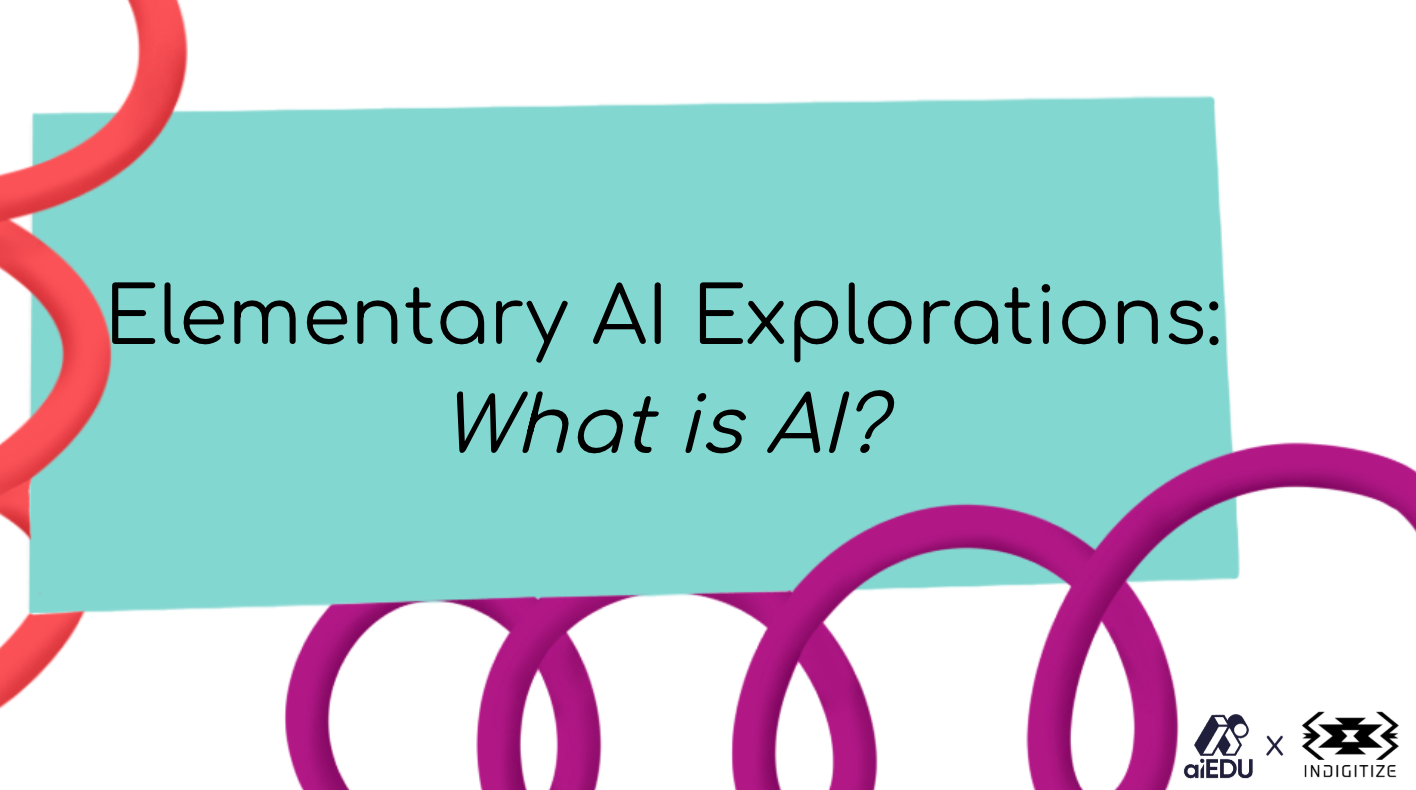
Elementary AI Explorations
This includes 2 sets of 15-20-minute classroom activities for Grades 3–5 that introduce foundational AI literacy concepts in tangible, age-appropriate ways. Adapted from the aiEDU series, this Indigitized resource brings culturally grounded framing to these explorations, asking students to consider how AI shows up in their communities and what values should guide it.
Being a Good Relative in a Digital World
This is a stand-alone unit for that supports High School ELA standards.
Adapted from the aiEDU x Rithm Project Snapshots, this unit of 3 topics can be taught as 3 ~30-minute lessons, or stretched over weeks for deeper engagement.
Series: Protecting Our Stories
The Protecting our Stories Series by Paige Nakai teaches students in grades 2-5 foundational digital safety concepts: what data is, how it travels online, and why protecting personal and cultural information matters. Designed for Indigenous students, the series centers cultural and community knowledge, helping students practice care, consent, and responsibility when sharing stories and traditions online.

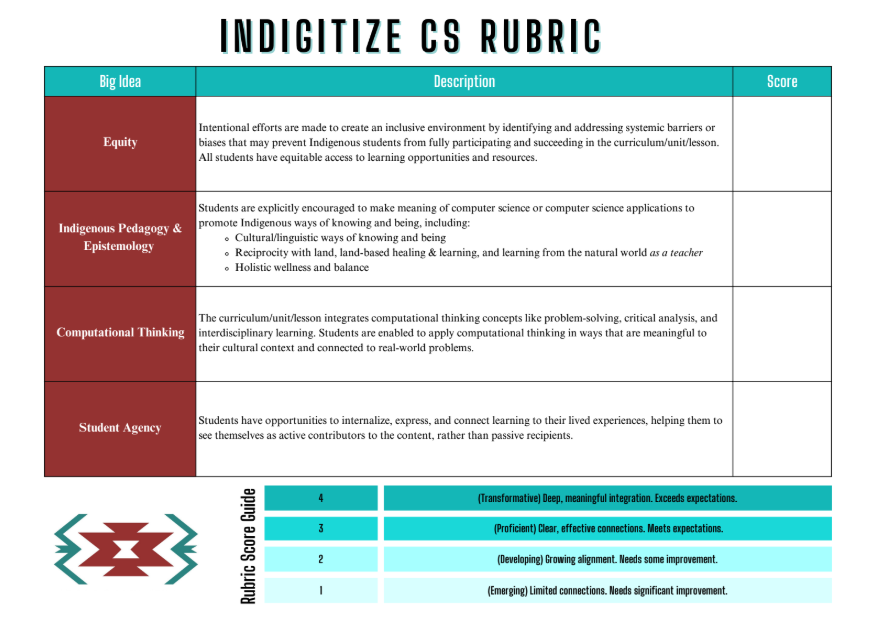
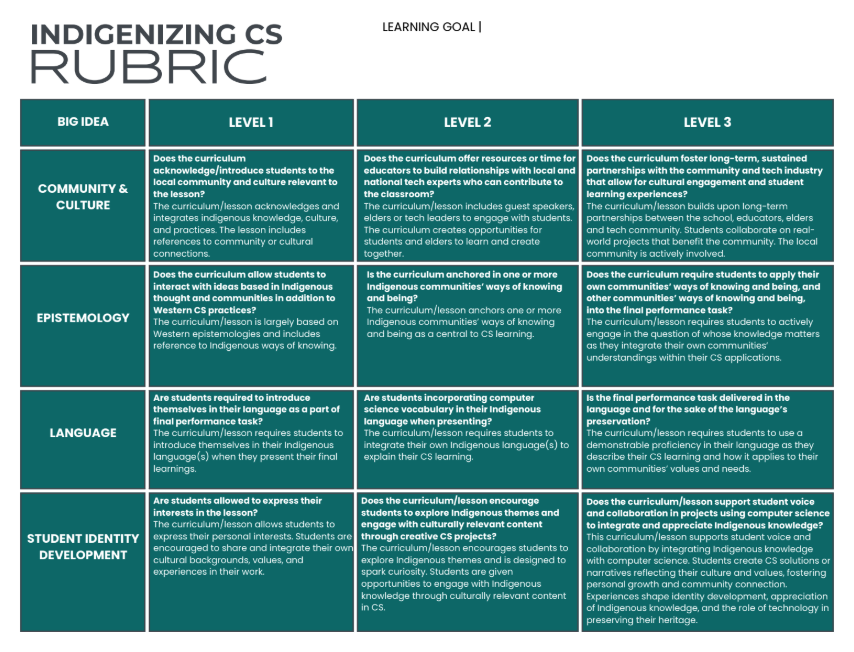
Computer Science Rubrics
In 2024, we collaborated with dozens of passionate educators to develop Indigenous Computer Science (CS) Rubrics. These rubrics empower educators to align CS with Indigenous values, supporting students’ cultural identities and technical skills.